
Why Does Your Mare Feel Different in the Fall? What a Moody Mare Supplement Can and Can't Fix
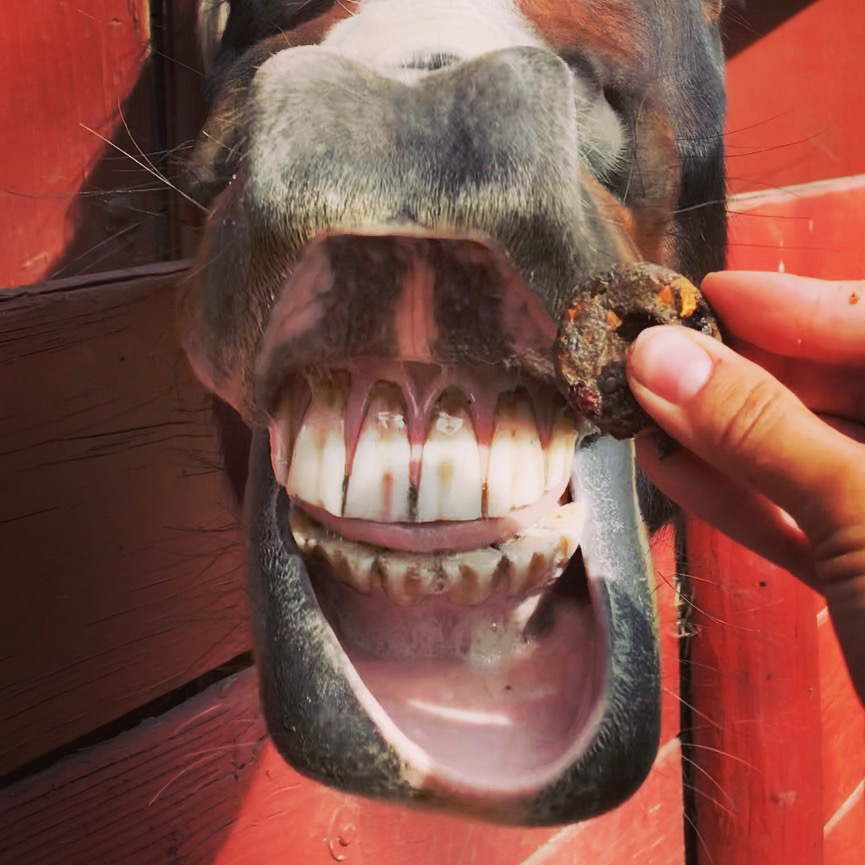
Nobody knows your mare like you do. You know which side she likes brushed first, what her ears do when the farrier's truck pulls in, and how she tells you in the first five minutes whether a ride is going to be work.
So when fall comes and she starts to feel like a different horse, you notice.
Late summer is when a lot of owners go looking for a moody mare supplement, and it is a reasonable instinct. Her body really is changing this time of year. But "she's just being a mare" is the explanation people reach for first and check last, and sometimes it is covering for something that hurts. By the end of this you will know what is actually shifting inside her as the season winds down, a simple way to tell hormonal behavior from a physical problem, and where nutrition can genuinely help.

One owner told us about a new mare who arrived at a training barn and spent her first weeks calling nonstop, presenting herself to every gelding and stallion on the property, and coming apart whenever she was asked to focus. The owner was half convinced she had bought a problem. That mare's behavior was hormonal, and it was loud. The harder cases are the quiet ones.
What Actually Changes in Her Body in the Fall
Mares are built to foal into spring grass, so their reproductive clock runs on daylight. The signal is darkness. Through the night, a small gland in the brain releases melatonin, and the longer the nights get, the more of it she makes. Enough of it quiets the hormones that drive her cycles.
The timing lines up almost exactly with the start of school. Oklahoma State University Extension puts the typical ovulatory season at mid-April through mid-September, with activity declining once daylight drops below the autumn equinox on September 21. Most mares then settle into a winter break from cycling altogether. Somewhere between 10 and 25 percent keep cycling through winter, usually mares with good nutrition and comfortable housing.
Through summer, a healthy mare's pattern is fairly predictable: roughly five to seven days in heat, then about two weeks out of it. The fall wind-down is messier. Extension specialists describe the hallmark of the transition as a longer-than-expected stretch of receptivity, and her ovaries can grow follicles that never release an egg. The calendar you had figured out in June may stop making sense.
Fall is not an off switch. It is a dimmer, and some mares flicker on the way down.
That is real, and it is normal. It is also exactly why this is the time of year when other problems get mislabeled.
Is It Hormones, or Is She Hurting?
Michigan State University's Paula Hitzler put it plainly: with a normal mare, you should not be able to tell from working with her whether she is a mare or a gelding. Heat can make a mare distracted, squealy, or clingy with her friends. It should not make her miserable to ride every day.
The most useful tool here costs nothing. Hang a calendar in the tack room and write down her behavior every day for six weeks: good day or bad day, and what the bad looked like. Note heat signs too, like winking, squatting, frequent urination, or a raised tail around geldings.
Then look at the pattern.
Behavior that comes and goes on something like a three-week rhythm, lining up with heat, points toward hormones. Behavior that shows up on any day, in or out of heat, points away from them. So does behavior tied to a specific moment, like tightening the girth, asking for the canter, or heading downhill.
Veterinary researchers have built a checklist for exactly this. Dr. Sue Dyson's Ridden Horse Pain Ethogram lists 24 behaviors under saddle, including ears pinned flat for five seconds or more, repeated large tail swishing, head tossing, an intense stare, and breaking gait. A horse showing eight or more is likely dealing with musculoskeletal pain. When
Dyson and Pollard applied it to 60 ordinary riding horses in regular work, 73 percent turned out to be lame in one or more limbs, and the median score was 9 out of 24. Read that list again and notice how many of those behaviors get called "mareish."

What Else Looks Like a Moody Mare?
If the calendar says her behavior is not following her cycle, these are the usual suspects to bring to your vet.
Gastric ulcers. Girthiness, crankiness when brushed along the belly or flank, and a sour attitude before work are all commonly linked to stomach discomfort.
Saddle fit. A mare who gained or lost topline over the summer may be wearing a saddle that fit in April and does not now. Resentment at saddling, a tight back, and trouble holding the canter are classic signs.
Musculoskeletal pain. Sore hocks, a sore back, or low-grade lameness often show up as attitude long before they show up as a limp.
Reproductive problems that are not normal cycling. A granulosa cell tumor on the ovary can produce hormones that cause stallion-like or aggressive behavior, and a blood test for anti-Müllerian hormone is a common first step. Urinary or vaginal infections can also look like heat.
None of these are answered by a supplement, and it would be a disservice to you and your mare to suggest otherwise.
How Do You Calm a Mare in Heat?
Once pain is ruled out and the calendar says her behavior really does travel with her cycle, you have options. Your vet can talk you through hormone therapy such as altrenogest (Regumate), which suppresses heat and is worth a conversation for mares whose cycles are genuinely disruptive. Management helps too: consistent turnout, steady company, and forage in front of her.
Diet belongs in that conversation more than people realize. A ration heavy in sugary feed and treats can make temperament harder to manage generally, not just in heat. One customer described her young warmblood mare as staying "flirty and fun without hormonal grumpiness" after moving to a grain-free, low-sugar program.
Not sure how much sugar is in the tub right now? Run her current ration through our Diet & NSC Calculator and see where the total sits.

Here is where a lot of mare supplement marketing overreaches, and you deserve the straight answer. Vitex berry, or chasteberry, is the herb in nearly every mare formula on the market, including ours. It has a long history of use for hormonal balance, and owners report real changes. But no controlled clinical trial has tested it on mare mood or heat behavior. The equine studies that do exist looked at a different question, PPID, and did not show chasteberry lowering the hormone vets track in that disease.
So the honest headline is not that herbs fix mares. It is that the evidence in horses is thin, the tradition is long, and the only verdict that matters is the one you can see in your own mare.
That is also why the calendar comes first. It tells you whether a supplement is even the right question, and later, whether it is working.
What Should a Mare Supplement Actually Do?
With the evidence where it is, the questions worth asking are practical ones. Is every ingredient there for a reason, or is the scoop padded with fillers? Does it add sugar to a diet you are working to keep clean? And is the company honest about which mares should not take it?
Those are the questions Balanced Mare Blend was built around. Six whole ingredients: vitex berry, the herb most associated with hormonal balance; raspberry leaf, traditionally used to support uterine tone; cramp bark, a smooth muscle relaxant long used for cycle-related cramping; chia, for omega-3s; dandelion, for naturally occurring magnesium; and rosemary, for antioxidants. It is third-party tested by Equi-Analytical at 9.2% NSC and 5.7% ESC + starch as sampled, with no GMOs, soy, added sugars, corn, grains, molasses or fillers. For a horse under 1,350 lbs, the recommended serving is 25 g, or roughly 1/3 cup, per day. Our Balanced Mare Blend ingredient guide goes through each one in detail.
Keep the calendar going after you start. Give it at least two full cycles, and compare her bad days before and after. What it will not do is change who she is. One owner whose two mares used to scrap in the paddock told us they had stopped biting and scuffing each other up, with "still some dirty looks." That is about right. Another said she could no longer tell when her young mare was in season, and could ride her comfortably any day of the month. That is the goal: a mare who is herself all month long.

Give Her a Steadier Season
Six weeks of notes on a calendar will tell you more than any label.
Some owners find the bad days line up neatly with her heat, and the fall wind-down is the whole story. For that mare, Balanced Mare Blend is made for exactly this stretch of the year. Others find the bad days are scattered across the month or tied to the girth, and the calendar just saved them months of treating the wrong problem. That is its own kind of answer.
Either way, you will be reading her from evidence instead of a label. And nobody is better placed to do that than you.
Next read: If sugar in the wider diet is part of the picture, The Real Issue with Sugar and Molasses for Horses picks up where this leaves off.
References
Oklahoma State University Extension, "Reproductive Management of the Mare," Kris Hiney and Elisabeth Giedt, May 2025 (long-day breeding, mid-April to mid-September ovulatory season, prolonged receptivity during transition)
TheHorse.com, "Mares in Heat: What's Normal, What's Not?," May 5, 2026 (cycle length, Hitzler quote, abnormal signs, granulosa cell tumors and AMH testing, calendar tracking)
Veterian Key, "Irregularities of the Estrous Cycle and Ovulation in Mares (Including Seasonal Transition)" (10 to 25 percent cycling through winter, anovulatory follicles)
Dyson, S., "The Ridden Horse Pain Ethogram," Equine Veterinary Education, 2022 (24 behaviors, threshold of eight or more)
Dyson, S. and Pollard, D., "Application of a Ridden Horse Pain Ethogram and Its Relationship with Gait in a Convenience Sample of 60 Riding Horses," Animals, June 2020 (73 percent lame, median score 9 of 24)
Mad Barn, "5 Research-Backed Benefits of Chasteberry in Horses" (no clinical trials on mood, PPID findings)


The calendar method is one of the most practical tools mentioned here, and it costs nothing. For anyone managing horses on rural acreage in a high-desert climate or thinking about a move, https://27homestead.com/complete-guide-to-buying-a-horse-property-in-placitas-nm covers hay sourcing, water, and daily care considerations specific to that environment. Diet and routine show up in temperament more than people expect. The saddle fit point is easy to overlook in fall when topline condition changes after a summer of work, and that can look exactly like a hormonal issue when it has nothing to do with her cycle.