
Natural Horse Treats vs. Feed-Store Snacks: Why Whole-Food, No-GMO Ingredients Matter
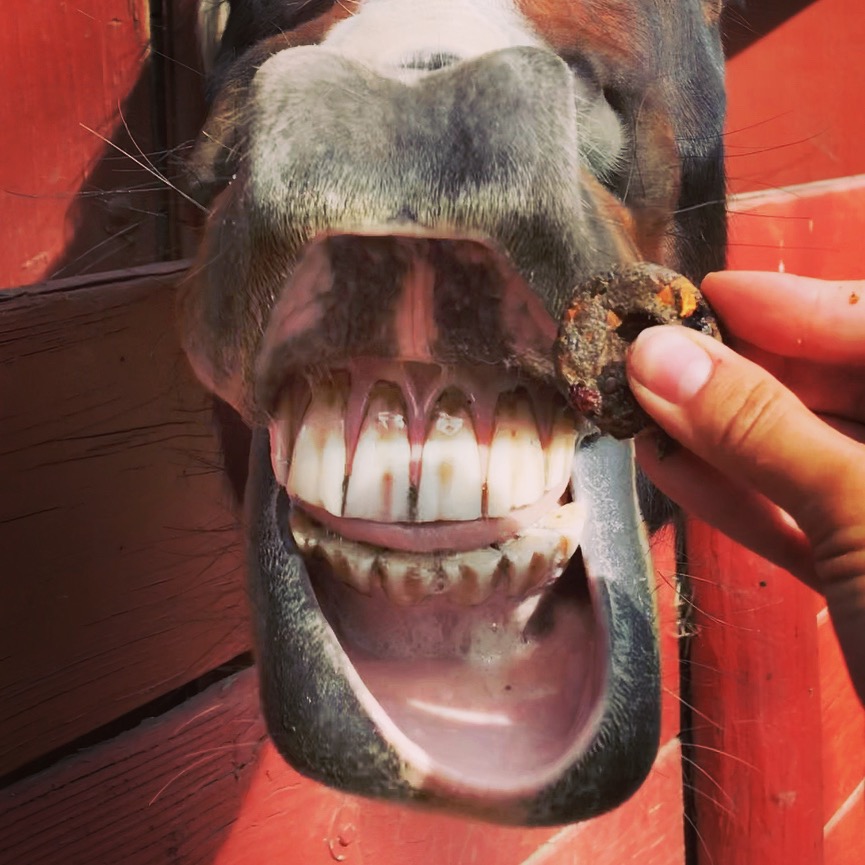
If you’ve searched for natural, non-GMO, corn-free, or soy-free horse treats, you’ve probably noticed something unsettling.
Walk down the aisle of almost any feed store and you’ll see brightly colored bags promising healthy, premium, nutritious, and fortified. The packaging suggests a thoughtful, wholesome snack designed with equine health in mind.
But when you flip the bag over and read the ingredient list, the reality often looks very different.
Instead of recognizable whole foods, many commercial horse treats contain ingredients like corn, soy, molasses, artificial flavors, binders, fillers, and preservatives. These additives aren’t chosen because they nourish horses particularly well. They’re usually chosen because they are inexpensive, shelf-stable, and extremely palatable.
At Twenty Four Carrots, we believe a horse treat should support your horse’s health rather than quietly undermine it.
And for us, this philosophy isn’t about following the latest nutrition trend. It’s about respecting whole-food equine nutrition and the biological design of the horse.
The Problem With Many Commercial Horse Treats
Most traditional feed-store treats are designed around three priorities:
Low production cost
High sweetness to guarantee palatability
Long shelf life for easy distribution
To achieve those goals, manufacturers often rely on a similar ingredient structure.
Common components include:
Corn (a high-starch grain often used as a filler)
Soy products (used as inexpensive protein and binding agents)
Molasses or added sugars (to improve taste)
Artificial flavors
Binders and stabilizers
Preservatives
Agricultural by-products

These ingredients are not necessarily toxic in small quantities. However, they often add very little nutritional value and can contribute unnecessary starch, sugar, and inflammatory compounds to the diet.
For horses that are metabolically sensitive, the implications are more significant.
According to guidance referenced by the National Research Council (NRC) and clinical resources from the American Association of Equine Practitioners (AAEP), excessive dietary starch and sugar can contribute to:
Hindgut fermentation disruption
Insulin dysregulation
Increased laminitis risk
Gastrointestinal discomfort
Metabolic stress in susceptible horses
While a single treat may seem insignificant, it’s important to remember that feeding routines are cumulative.
If a horse receives just three treats per day, that’s more than one thousand treats per year. Even small nutritional inputs add up over time.
Horse owners today carefully consider:
forage quality
electrolyte balance
joint and hoof supplements
protein and amino acid intake
vitamin and mineral ratios
It makes sense to apply the same level of care to the food we offer directly from our hands.
The Horse Digestive System: Built for Fiber, Not Sugar
To understand why ingredient quality matters so much, it helps to look at how the horse’s digestive system evolved.
Horses are hindgut fermenting herbivores. Their digestive physiology developed over millions of years to process a diet that consisted primarily of:
grasses
fibrous plants
small quantities of naturally occurring sugars
diverse plant phytochemicals
Unlike ruminants, horses rely heavily on microbial fermentation in the cecum and large colon to break down fiber.
This microbial ecosystem is delicate.
Sudden increases in starch or sugar can overwhelm the small intestine’s ability to digest carbohydrates. When undigested starch reaches the hindgut, it can alter microbial populations, leading to:
increased lactic acid production
hindgut acidosis
microbial die-off
gas production
inflammation

In extreme cases, these changes can contribute to colic or laminitis.
Even when the effects are subtle, repeated disruptions can lead to digestive discomfort, metabolic stress, and inflammatory responses.
Because of this, equine nutritionists often emphasize keeping starch and sugar levels controlled, especially in horses that are:
insulin resistant
prone to laminitis
easy keepers
diagnosed with Equine Metabolic Syndrome (EMS)
recovering from metabolic stress
Treats may seem minor, but they are part of that equation.
What Makes a Truly Natural Horse Treat?
The word “natural” has become a marketing buzzword in many areas of animal nutrition. Unfortunately, there is no strict regulatory definition that guarantees ingredient quality.
A product can be labeled natural while still containing heavily processed components.
When evaluating horse treats, a truly natural formulation should reflect a whole-food approach.
Key characteristics include:
Real, recognizable ingredients
No genetically modified crops
No corn
No soy
No molasses or added sugars
No artificial flavors
No synthetic preservatives
No fillers or by-products
Ideally, the ingredient list should look more like something you might find in a kitchen or garden rather than a laboratory.
A good rule of thumb is simple:
If you can recognize, pronounce, and visualize the ingredient, it’s likely closer to whole food.
Why No-GMO, Corn-Free, and Soy-Free Matters
Many horses tolerate corn and soy without obvious issues. However, these ingredients can still present challenges depending on the horse’s individual sensitivity and metabolic state.
Corn
Corn is one of the highest starch grains commonly used in horse feed.
High-starch diets can:
elevate blood glucose levels
increase insulin response
contribute to inflammatory metabolic pathways
For horses predisposed to metabolic conditions, minimizing unnecessary starch sources is often recommended.
Soy
Soy is widely used in animal feeds as a low-cost protein source and binding agent. However, some horses show sensitivities to soy proteins, which can manifest as:
skin irritation
respiratory sensitivity
digestive upset
coat dullness
Soy is also frequently genetically modified, raising concerns among owners seeking cleaner ingredient sourcing.
Molasses
Molasses is commonly added to horse treats to enhance flavor and texture.
While horses often love the taste, molasses is high in sugar, which can contribute to rapid insulin spikes.
Kentucky Equine Research has repeatedly emphasized that managing starch and sugar intake is a cornerstone of metabolic horse management, particularly for animals with insulin dysregulation or laminitis risk.
Removing these ingredients from treats is a simple way to support overall diet balance.
The Benefits of Whole-Food Horse Treats
When horse treats are made with minimally processed whole ingredients, they can offer benefits beyond simple reward value.
Whole foods contain naturally occurring compounds that support equine health.
These may include:
Natural Fiber
Fiber supports digestive motility and provides substrate for beneficial hindgut microbes.
Phytonutrients
Plant-based foods contain bioactive compounds such as:
flavonoids
carotenoids
polyphenols
These molecules act as natural antioxidants that support cellular health.
Micronutrients
Whole foods provide trace minerals and vitamins in their natural matrices, which can improve bioavailability.
Reduced Inflammatory Burden
By avoiding excess sugar and processed fillers, whole-food treats reduce unnecessary metabolic stress.
Horse owners who transition to cleaner treats often report improvements in:
coat quality
skin condition
digestive comfort
energy stability
behavioral consistency
And because real ingredients taste good naturally, artificial sweeteners simply aren’t necessary.
Are Sugary Horse Treats Really That Bad?
The reality is that many horses absolutely love sugary treats.
From a biological perspective, this makes sense. Sweet flavors activate reward pathways in the brain, encouraging animals to seek calorie-dense foods.
But just because a horse enjoys something doesn’t mean it’s ideal for daily consumption.
Repeated sugar spikes can influence:
insulin regulation
energy fluctuations
inflammatory pathways
For horses prone to metabolic disorders, these effects are especially important.
Fortunately, horses are adaptable.
Many owners find that when they transition to lower-sugar, whole-food treats, horses adjust quickly. In fact, once the gut microbiome stabilizes and blood sugar fluctuations decrease, some horses demonstrate more consistent behavior and improved comfort.
Taste preferences can evolve just like they do in humans.
Why Ingredient Integrity Matters More Than Marketing

The equine nutrition market is full of bold claims and attractive packaging.
Words like:
premium
natural
fortified
veterinarian recommended
can easily mask ingredient lists that tell a very different story.
True nutritional quality isn’t determined by branding. It’s determined by ingredient integrity.
That means asking simple questions:
Where did the ingredients come from?
Are they minimally processed?
Do they support equine digestive biology?
Are they contributing nutrients or simply calories?
For horse owners committed to responsible feeding, these questions matter.
Why Twenty Four Carrots Chooses Whole-Food Equine Nutrition
At Twenty Four Carrots, we believe horse treats should reflect the same level of care that owners put into the rest of their horse’s diet.
That means prioritizing:
whole-food ingredients
clean sourcing
low glycemic impact
digestive compatibility
ingredient transparency
Our philosophy is simple: if an ingredient wouldn’t belong in a conscientious feeding routine, it doesn’t belong in a treat either.
Natural isn’t a marketing slogan for us. It’s a standard of formulation.
A Treat That Respects the Way Horses Are Fed
For horse owners who prioritize thoughtful nutrition, Twenty Four Carrot’s Super Food Horse Treats were designed with the same philosophy in mind.
These treats are:
Low-glycemic, making them a safer option for metabolic horses
Made with only human-food-grade whole ingredients
Completely free from fillers, by-products, soy, and molasses
Formulated to align with a conscientious feeding routine
But thoughtful formulation also means practical design.
The treats are firm enough that they won’t crumble in your pocket, which every horse owner can appreciate after a long day at the barn.
At the same time, they crush easily under gentle pressure, making them suitable for horses with dental sensitivity or missing teeth.
In other words, they’re designed not only with nutrition in mind, but also with real barn life in mind.
Because rewarding your horse should feel good for both of you.
Thanks for reading!
This week only (March 7, 2026 - March 14, 2026) use code 20OFFTREATS for 20% off Super Food Horse Treats!
References
National Research Council (2007). Nutrient Requirements of Horses: Sixth Revised Edition.
American Association of Equine Practitioners (AAEP). Equine nutrition and digestive health resources.
Geor, R., Harris, P., Coenen, M. (2013). Equine Applied and Clinical Nutrition. Saunders Elsevier.
Kentucky Equine Research. Research publications on starch intake and metabolic health in horses.


Comments